Pools Built With Equipment Standards That Last
Inground Pool Installation in Florence for Residential Properties With Soil and Drainage Conditions That Require Proper Depth and Plumbing
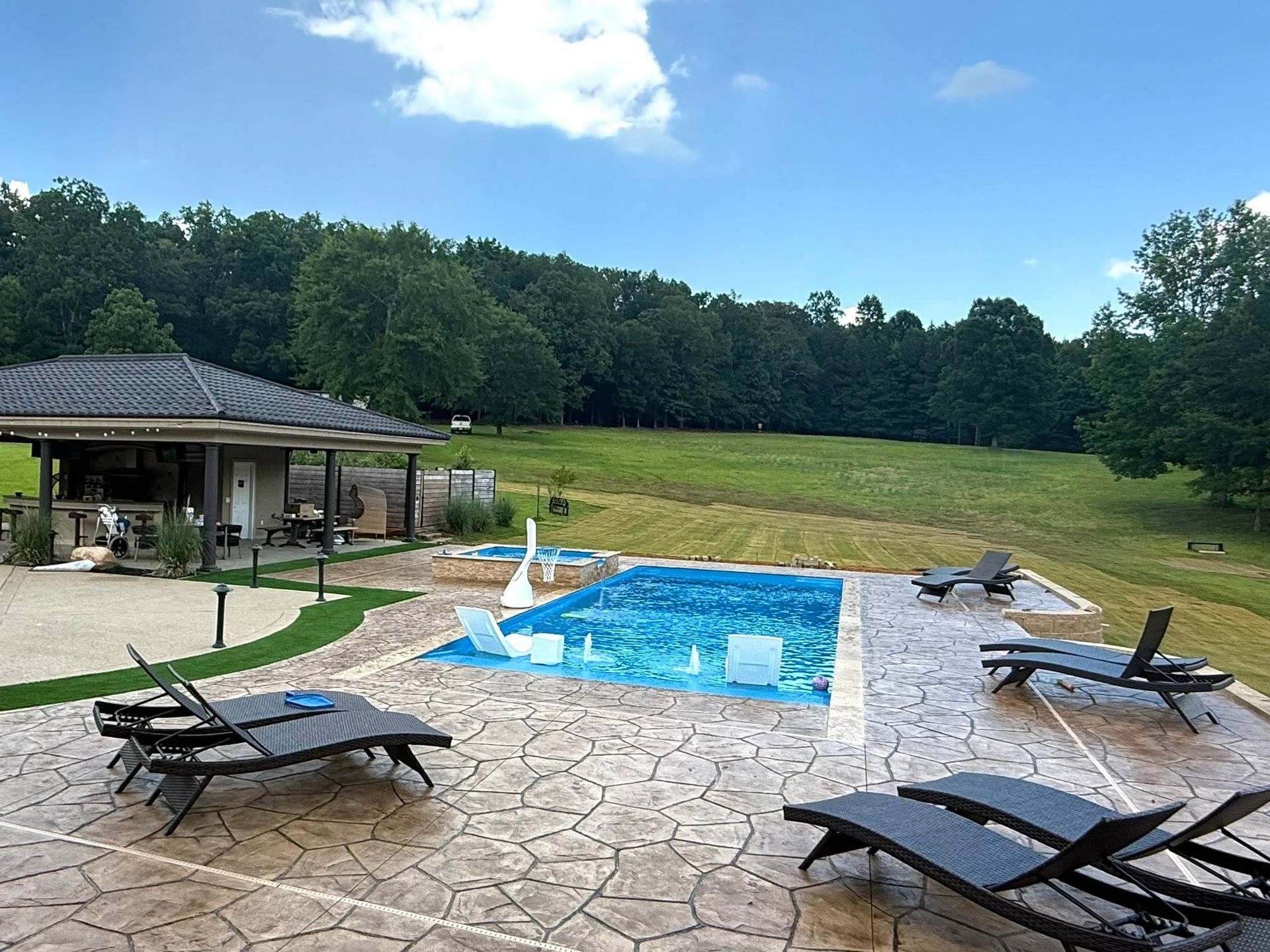
Alabama soil varies enough across Florence and Muscle Shoals that installation depth and drainage planning determine whether your inground pool stays level or develops cracks within five years. G&G Pools builds inground pools with equipment brand selection and plumbing specifications that match pool volume to filtration capacity, which prevents the early motor failure and poor water circulation that result from undersized or mismatched components. Inground pools suit year-round residential use in the Tri-Cities region, where summer heat makes backyard pools functional from May through September and design choices affect how well the pool handles both seasonal use and winter storage.
Installation involves excavation to the specified depth, plumbing line installation with equipment positioned for service access, and finish selection that determines surface durability and maintenance frequency. Equipment sizing calculations account for the pool's total water volume, and pump and filter capacity must turn over that volume within eight to twelve hours for effective filtration. The choice between fiberglass, vinyl liner, or concrete construction affects installation timeline, upfront cost, and long-term maintenance requirements.
Schedule a property evaluation to assess soil conditions and confirm equipment layout before excavation begins.
What Proper Installation Requires
Inground pool installation starts with calculating water volume based on pool dimensions, which determines the pump and filter size required for proper circulation and filtration. Plumbing runs are positioned to avoid sharp bends that restrict flow, and equipment pads are poured with enough space for service access without removing landscaping or fencing. Equipment brand selection affects both upfront cost and how long components last before replacement, with commercial-grade pumps and filters outlasting residential-grade options by several years under identical operating conditions.
Once installation finishes, the pool holds water at a consistent level without visible leaks, and the filtration system maintains water clarity without requiring daily chemical adjustments or constant backwashing. The surface—whether fiberglass, vinyl, or concrete—remains smooth without cracks or wrinkles, and the pool drains completely through bottom outlets when necessary for maintenance or winterization. Equipment operates on a predictable schedule, and pumps cycle without excessive noise or vibration that indicates bearing wear or impeller damage.
Installation includes excavation, plumbing line connection, equipment pad construction, and finish application or shell setting depending on the construction method. It doesn't include landscaping around the pool perimeter, fencing beyond what local codes require, or custom water features that add separate plumbing circuits and additional equipment.
Answers to Common Installation Questions
Inground pool installation requires decisions about construction method, equipment quality, and site preparation, so these questions address the factors that affect cost and long-term performance in the Florence area.
What construction method do you recommend for inground pools in Florence?
Fiberglass shells install faster and require less maintenance than vinyl liners, but custom shapes are limited to available molds. Vinyl liner pools cost less upfront but need liner replacement every seven to ten years, and concrete pools allow fully custom designs but take longer to install and require more surface maintenance over time.
How deep should an inground pool be for safe diving?
Diving requires a minimum depth of eight to nine feet in the deep end, with a gradual slope from the shallow end to avoid abrupt depth changes that cause injuries. Most residential pools in the Tri-Cities range from three to six feet deep, which suits recreational swimming without the excavation cost and water volume associated with diving-depth pools.
What equipment brands do you install for inground pools?
Equipment selection balances upfront cost with expected lifespan, and commercial-grade pumps and filters typically last eight to twelve years under residential use, compared to four to six years for entry-level residential models. G&G Pools installs equipment sized to your pool's water volume with brands that offer local service and replacement parts availability across Alabama.
Does Florence soil require special foundation preparation for inground pools?
Soil composition affects how much base material is needed to prevent settling, and clay-heavy soil holds water longer after rain, which can cause ground movement around the pool if drainage isn't addressed. Site evaluation determines whether additional gravel base or drainage lines are necessary before excavation, and proper preparation prevents cracks and structural shifting over time.
How long does inground pool installation take in Muscle Shoals?
Fiberglass pools typically complete within one to two weeks once the shell arrives, vinyl liner pools take three to four weeks including liner fabrication, and concrete pools require six to eight weeks due to curing time and multiple finishing steps. Weather delays, equipment delivery, and permitting can extend any of these timelines depending on local conditions.
G&G Pools installs inground pools across Florence and the Tri-Cities region with equipment quality and plumbing standards that support long-term performance and manageable maintenance schedules. Request a detailed estimate based on your property's soil conditions and preferred construction method.